A traditional Korean martial art blending ancient principles with modern personal development
Introduction
Tang Soo Do (often translated as “the way of the Tang hand”) is a Korean martial art known for its strong fundamentals, powerful kicking, and emphasis on character development. While many people encounter Tang Soo Do through self-defence classes or competitive forms, its roots stretch across centuries of East Asian martial tradition and Korea’s modern history.
This article outlines how Tang Soo Do developed into a distinct art and why its training methods remain relevant for students today—physically, mentally, and socially.
A Brief History of Tang Soo Do
Early Influences: Indigenous Korean and Regional Traditions
Korea has a long history of indigenous fighting practices, sometimes described through terms such as Subak and Taekkyeon. At the same time, Korea’s geographic position meant frequent cultural exchange with neighbouring regions, including China and Japan. Over time, striking, kicking, grappling, conditioning, and discipline-based training influenced each other across East Asia. Tang Soo Do emerged much later, but it drew on this broader foundation of martial culture—both local and regional.
20th-Century Korea and the Rise of the Kwans
In the mid-20th century, Korean martial arts schools—commonly called kwans—began forming and organising training more formally. During this period, many practitioners studied multiple systems, adapted what they learned, and worked to rebuild Korean identity through cultural practices, including martial arts. The name “Tang Soo Do” was used by some schools to describe a striking-focused art that combined hard and soft techniques, structured forms, and disciplined etiquette.
Hwang Kee and the Development of Modern Tang Soo Do
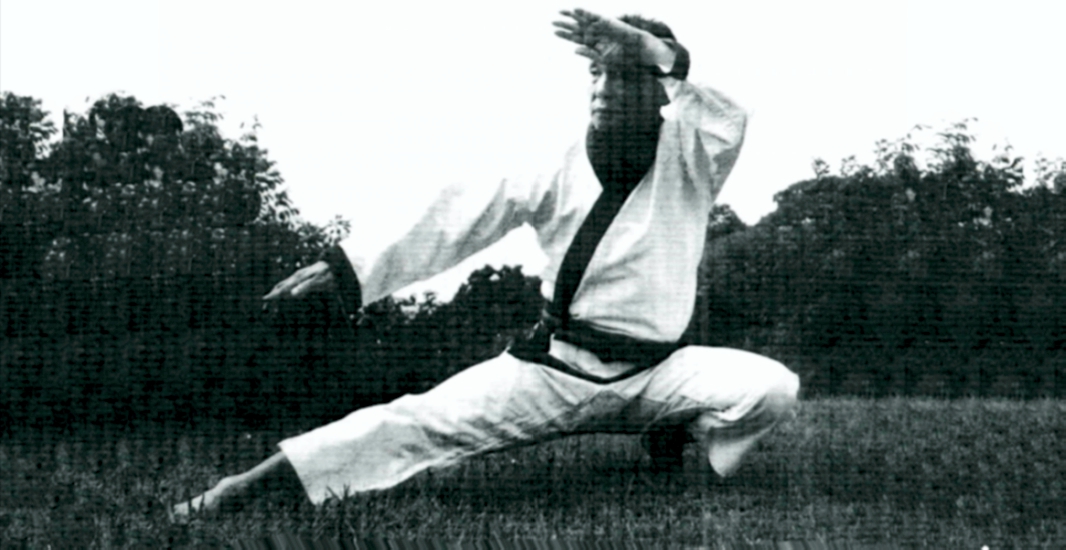
One of the most influential figures associated with Tang Soo Do is Hwang Kee, founder of the Moo Duk Kwan (established in 1945). Under his leadership, Tang Soo Do developed a recognisable curriculum: basics (blocks, punches, strikes, and stances), hyung (forms), one-step and self-defence drills, sparring, and conditioning. Equally important was the emphasis on personal conduct—respect, humility, perseverance, and self-control—so that technical skill developed alongside character.
International Growth and Modern Practice
As Korean martial arts gained global visibility, Tang Soo Do spread internationally through instructors who taught in military communities, universities, and local clubs. Today, Tang Soo Do is practised in dojangs around the world. While individual schools may vary in emphasis—traditional forms, sport sparring, practical self-defence, or fitness—the common thread remains a balance of disciplined training, technical fundamentals, and personal development.
What Training Typically Includes
- Basics (Kibon): stances, footwork, blocks, punches, strikes, and foundational kicks
- Forms (Hyung): structured sequences that build balance, coordination, breathing, and technique
- One-step/self-defence drills: rehearsed responses to common attacks to build timing and distance
- Sparring: controlled practice that develops composure, respect, and safe contact skills
- Conditioning: strength, flexibility, and endurance work to support healthy movement
- Etiquette and values: bowing, dojo/dojang rules, and consistent habits of respect
How Tang Soo Do Benefits Students Today
1) Physical Health and Athletic Skills
Regular Tang Soo Do practice improves cardiovascular fitness, strength, flexibility, and coordination. Because students repeat fundamentals and build skills progressively, training can support long-term joint-friendly movement patterns (such as stable stances, controlled kicking mechanics, and core engagement) rather than relying only on raw speed or power.
2) Confidence, Focus, and Emotional Regulation
Martial arts training gives students clear goals (belts, skills, forms) and frequent feedback, which can build confidence through earned progress. Drills and sparring also teach students to stay calm, make decisions under pressure, and recover from mistakes—skills that transfer to school, work, and everyday challenges.
3) Character Development and Respectful Community
Tang Soo Do schools typically reinforce respectful behaviour through etiquette, partner work, and consistent standards of conduct. Students learn to lead and to follow: beginners benefit from mentoring, while advanced students develop responsibility by helping others. This structure supports a positive community where improvement is shared rather than competitive in a negative sense.
4) Practical Self-Defence Awareness
Although many classes are not taught as a “quick self-defence course,” Tang Soo Do develops important building blocks: distance management, timing, balance, and the ability to move decisively. Just as importantly, good instruction highlights awareness, de-escalation, and personal boundaries so students understand that safety includes judgment—not only technique.
5) Habits That Support Learning
The traditional structure of Tang Soo Do—warm-ups, basics, forms, partner drills, and reflection—encourages consistency. Students practise setting goals, breaking complex skills into steps, and responding to coaching. Over time, this builds discipline and a growth mindset that helps in academics, sports, music, and professional training.
Conclusion
Tang Soo Do’s modern curriculum was shaped in 20th-century Korea, but it carries forward older martial principles: disciplined practice, technical fundamentals, and respect for others. For students today, its value goes beyond learning kicks and forms—training can strengthen the body, sharpen focus, build confidence, and create a supportive community built on steady improvement.